
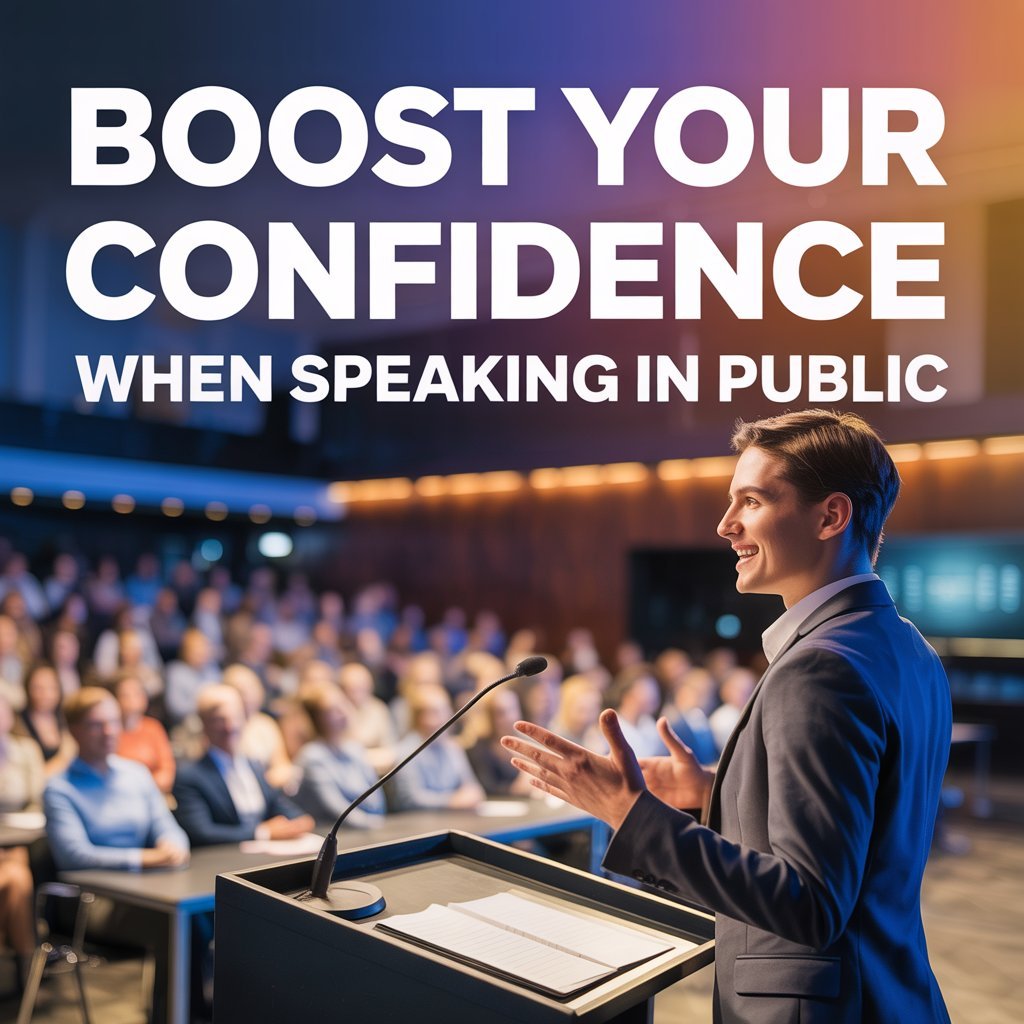
A Professional Guide to Overcoming Fear and Communicating with Authority.
Public speaking is one of the most common fears worldwide. However, confidence in speaking is not a talent reserved for a few; rather, it is a skill developed through preparation, repetition, and mindset training. Therefore, if you feel nervous before addressing an audience, understand that you are not alone — and, more importantly, you can improve.
In this article, you will discover practical strategies to boost your confidence when speaking in public and transform anxiety into authority.
1. Understand the Root of Public Speaking Anxiety
First and foremost, nervousness often stems from fear of judgment. In other words, we worry about being criticized, forgetting our words, or appearing unprepared. Consequently, our body reacts with symptoms such as a fast heartbeat, shaky hands, or a dry mouth.
However, it is important to recognize that these reactions are natural. In fact, even experienced speakers feel adrenaline before stepping on stage. The difference is not the absence of fear, but rather the ability to manage it.
2. Prepare Thoroughly — Confidence Follows Clarity
Preparation is the foundation of confidence. When you know your material well, uncertainty decreases significantly.
To prepare effectively:
- Outline your main points clearly
- Structure your introduction, body, and conclusion
- Practice aloud multiple times
- Anticipate possible questions
Moreover, avoid memorizing your speech word-for-word. Instead, focus on understanding your key ideas deeply. As a result, you will speak more naturally and adapt more easily if you lose your place.
3. Practice in Low-Pressure Environments
Although stage experience is powerful, you can build confidence gradually.
For example:
- Practice in front of a mirror
- Record yourself and review the footage
- Present to friends or family
- Join small discussion groups
In addition, organizations such as Toastmasters International provide structured environments where individuals practice speaking regularly and receive constructive feedback. Over time, repetition reduces fear and builds competence.
4. Improve Your Body Language
Interestingly, confidence is communicated before you even speak. Therefore, your posture and gestures play a crucial role.
To project confidence:
- Stand upright with shoulders relaxed
- Maintain steady eye contact
- Use natural hand gestures
- Avoid pacing excessively
Furthermore, research suggests that posture influences psychology. When you adopt confident body language, your brain begins to interpret your stance as a signal of control. Consequently, you start to feel more confident internally.
5. Focus on the Message, Not Yourself
Many speakers lose confidence because they focus excessively on how they appear. Instead, shift your attention to the value you are providing.
Ask yourself:
- What does my audience need to learn?
- How can I help them?
- What problem am I solving?
By concentrating on service rather than self-image, you reduce self-consciousness. As a result, your delivery becomes more authentic and impactful.
6. Control Your Breathing
Anxiety often disrupts breathing patterns. Therefore, practicing controlled breathing can stabilize both your voice and your nerves.
Before speaking:
- Inhale slowly for four seconds
- Hold for four seconds
- Exhale for four seconds
- Repeat several times
This technique calms the nervous system and prevents rushed speech. Consequently, you appear composed and deliberate.
7. Accept Imperfection
Perfectionism is one of the greatest barriers to confident speaking. However, audiences do not expect perfection; they expect clarity and authenticity.
Even renowned speakers such as Brené Brown have openly discussed vulnerability during presentations. Similarly, platforms like TED feature speakers who occasionally pause or adjust mid-speech — yet their impact remains strong.
Therefore, instead of fearing small mistakes, accept them as human moments. In most cases, the audience barely notices.
8. Build Confidence Through Repetition
Confidence is not built in a single event. Rather, it develops through consistent exposure.
Start small:
- Ask a question during meetings
- Volunteer to present brief updates
- Lead a small group discussion
Gradually increase the level of challenge. Over time, what once felt overwhelming becomes manageable — and eventually natural.
The Psychology Behind Speaking Confidence
When you repeatedly confront your fear of public speaking:
- Your brain learns that the situation is not dangerous.
- Your physical symptoms decrease.
- Your competence improves.
- Your self-image strengthens.
Consequently, confidence becomes a learned response rather than a forced performance.
Confidence Is a Skill, Not a Personality Trait
Boosting your confidence when speaking in public requires intention, preparation, and practice. However, the transformation is achievable for anyone willing to step outside their comfort zone.
Remember:
- Preparation builds clarity.
- Clarity reduces fear.
- Repetition builds mastery.
- Mastery builds confidence.
Ultimately, the goal is not to eliminate nervousness entirely. Instead, it is to speak despite it — with purpose, presence, and authenticity.
And when you do, your voice becomes not only heard, but respected.
Purity Blog